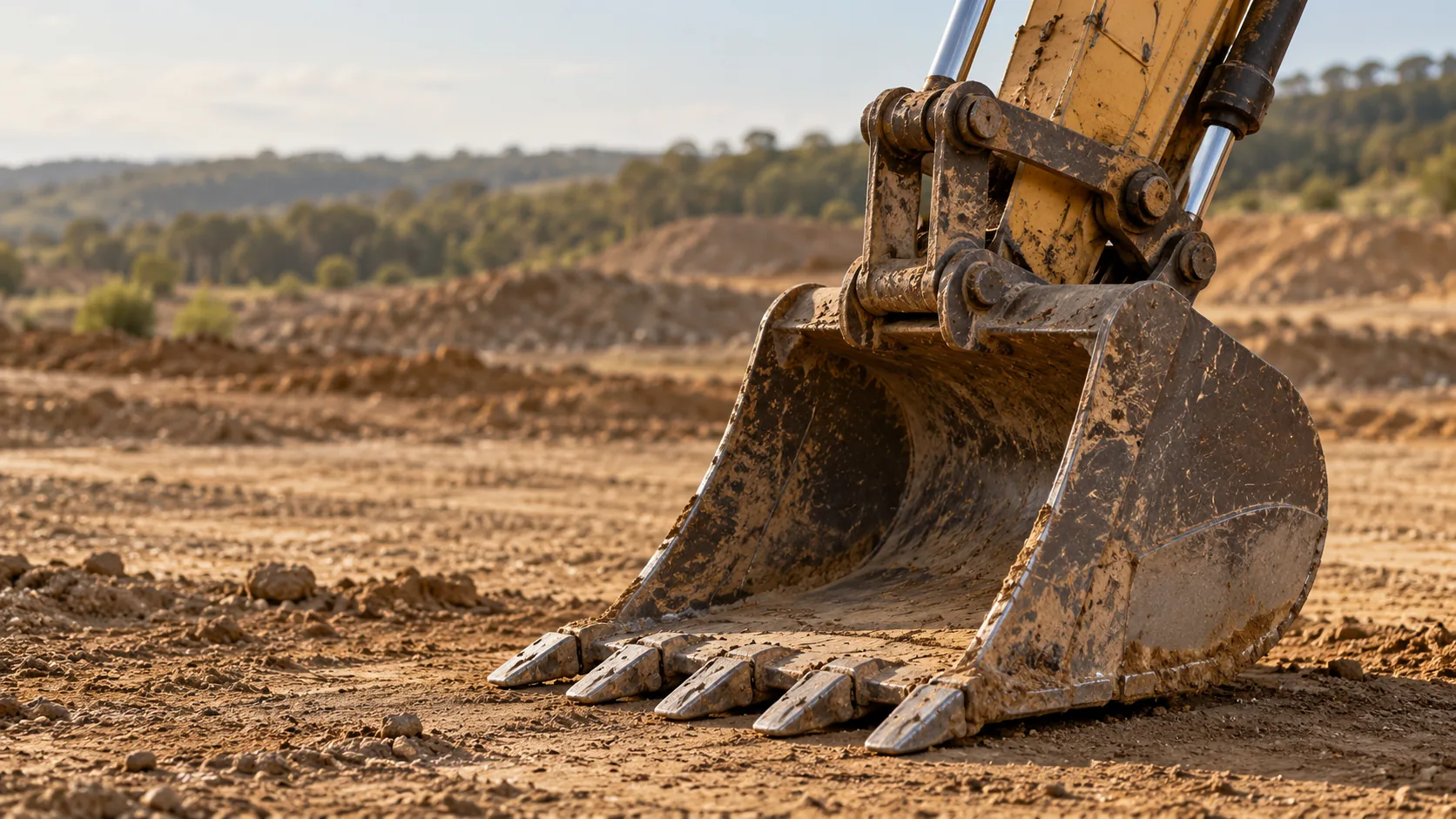
Earthmoving and civil contracting is a business of large assets, lumpy cash flow and paperwork that arrives from four directions at once: the ATO, the state regulator, the bank and the head contractor. Most of the accounting problems we see in the industry are not mistakes. They are decisions that were never made, because nobody sat down and made them before the next job started.
We work with owner-operators and growing crews in Queensland and New South Wales and with contractors in other states, including businesses that run jobs on both sides of a border and carry two sets of state rules as a result. The work is the same wherever the machines are: get the structure right, keep the books clean enough to answer a lender or a licensing body on the day they ask, claim every credit the business is entitled to and nothing it is not, and plan the tax before the year ends rather than after.
Fuel tax credits: the issue we fix most often
For a plant-heavy business, fuel tax credits are real money, and they are one of the most consistently mis-claimed items we see. The problems come in a handful of shapes. Claims made at a single rate across the fleet, when fuel burned in an excavator off-road attracts the full rate and fuel burned in a tipper on a public road attracts a reduced rate net of the road user charge. Dual-use vehicles, trucks that travel on the road and then work off it, apportioned by guess rather than by a method the ATO will accept. Fuel used to power auxiliary equipment on a heavy vehicle, the hydraulics on a tipper or the pump on a water cart, left out of the calculation altogether. Rates that index twice a year applied from a spreadsheet nobody has updated since the business started. Light vehicles on public roads claimed when they are not eligible. Wet-hire arrangements where both parties think the other is claiming, or both claim. And credits simply never claimed, year after year, when the four-year window to go back and fix it is quietly closing.
We rebuild the claim from the fleet up: each machine and vehicle classified, on-road and off-road use apportioned on a documented basis (telematics where you have it, a fair and reasonable method where you do not, or the ATO’s simplified approach where the claim is small), auxiliary equipment included, and a method and rate sheet your bookkeeper applies each period. Prior periods are amended through us where there is money on the table. The result is a larger claim in most cases, and one that holds up if the ATO asks.
The other situations we see
A sole trader or single company that has grown into three excavators, two tippers and a float, all financed, all in the trading entity’s name, so the plant sits exposed to every contract risk the business takes on. Progress claims and retentions recognised as income on paper months before the cash arrives, with a BAS liability to match. Security-of-payment and retention rules that differ between states, applied as if they were the same. Subcontractors paid without a taxable payments report in sight, or contractors who look very much like employees once state payroll tax contractor provisions and superannuation are considered, with each state drawing the line a little differently. Portable long service leave levies and licensing obligations, QBCC in Queensland, the NSW regime over the border, met late because nobody owned the calendar. Licensing financial requirements, where they apply, prepared from financials that were built for tax rather than for the regulator. An owner drawing on the company between jobs with Division 7A loans nobody is tracking, and a benchmark interest charge building quietly in the background.
What we do
Structure first. Where it fits, plant and equipment is held in a separate entity and leased to the operating company on commercial terms, so a bad job does not put the fleet on the table. We set the finance up to match: chattel mortgage, lease or hire-purchase chosen for the tax and cash-flow outcome, not whichever the dealer had on the desk. Depreciation and the small business asset thresholds are planned around delivery dates rather than discovered at year end.
Compliance is built around the industry’s own cycle and the states you actually work in: progress claims and retentions tracked against revenue recognition, the fuel tax credit method reviewed each year so your bookkeeper claims it properly every quarter, taxable payments reporting handled, payroll tax contractor positions reviewed state by state before a revenue office does it for you, and licensing or financial-requirement reporting produced from numbers that already hold up.
Planning runs alongside: owner remuneration sequenced across wages, dividends and super; Division 7A kept on complying terms; instalments varied when a big job lands or finishes; and the long view on where the business goes when the owner stops driving the machines, whether that is a sale, a succession or winding it down well.
Where to start
Thirty minutes with a partner. Bring the last set of financials, the equipment schedule and your last four BAS. We will tell you what we would change, in what order, what it would cost, and whether there is a fuel tax credit amendment worth lodging before anything else. Or start with the free file review, which is where fuel tax credit problems tend to show up first.
If you would rather fix the records first, Fuel Tax Credits Made Clear is our forty-six page handbook for operators and bookkeepers: which machine attracts which rate, how to apportion dual-use trucks, and the worksheets to keep each quarter. It is free.
Related services
The services behind the work.
Tax & Compliance
Annual returns, taxable payments reporting, the fuel tax credit method reviewed, and the regulator’s calendar.
Read moreStructure & Setup
Plant in one entity, operations in another, set up once with the exit in mind.
Read moreTax Planning
Asset timing, instalment variations and owner remuneration decided before 30 June.
Read more
Start a conversation
Tell us what you’re working on.
One call. Partner-led. No queue.
New here? Start with a free review of your file.